
Living with Achalasia Cardia feels like a constant battle against your own body. The simple, life-sustaining act of swallowing becomes a source of anxiety, pain, and discomfort. For many, definitive treatments like POEM or Heller Myotomy are the end goal, but what about managing symptoms and protecting your nervous system right now?
Emerging research is shifting the focus from just force-opening the Lower Esophageal Sphincter (LES) to a more holistic strategy: natural calcium channel blockade, neuroprotection, and inflammation control.
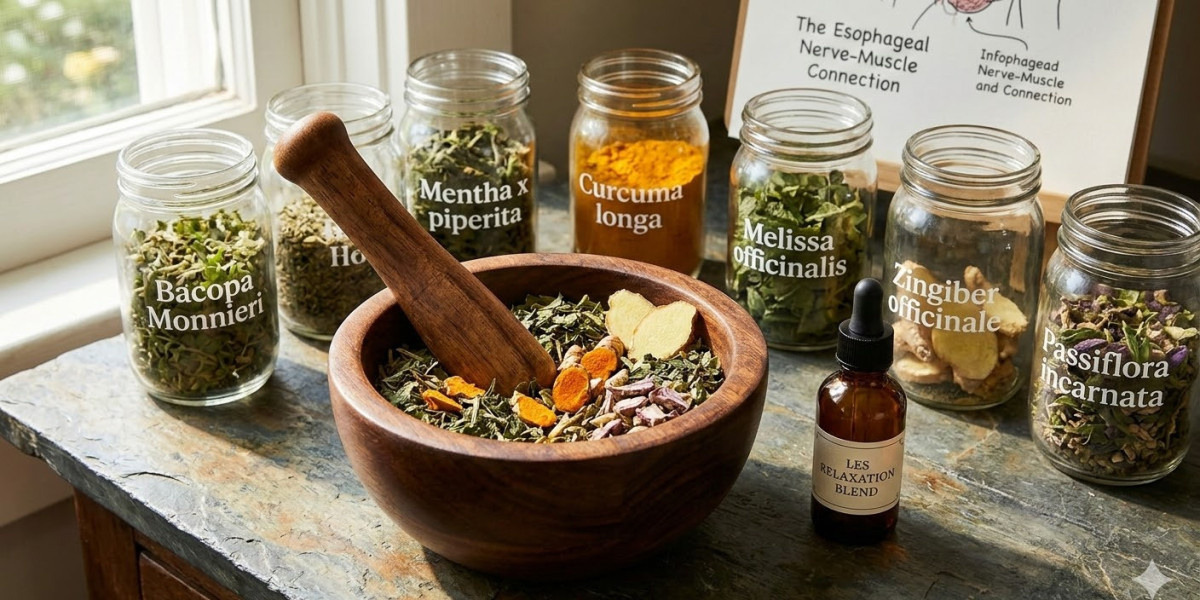
We have synthesized the latest pharmacological studies and clinical insights to create a "Globally Promising" herbal protocol. This is not just about suppressing symptoms; it is about addressing the three critical pillars of Achalasia pathophysiology.
Understanding the Achalasia Challenge
Achalasia is a rare motility disorder where the esophagus loses its ability to squeeze food down, and the LES (the valve into the stomach) fails to relax. We now know that the root cause is the autoimmune-mediated destruction of the nerves (the myenteric plexus) that regulate this process.
Traditional herbal medicine often focuses on systemic "relaxation." To make a protocol globally promising for Achalasia, it must focus specifically on smooth muscle and nerve health.
Here is the 3-tiered research-backed framework:
Pillar 1: Mechanical Relaxation (Open the Valve)
The first goal is to mechanically ease dysphagia (difficulty swallowing). This requires direct-acting agents on the LES smooth muscle.
The "Natural Calcium Channel Blocker": Peppermint Oil
Peppermint oil, rich in menthol, is one of the most researched herbal agents for esophageal spasms. Research (e.g., Bortolotti et al.) demonstrates that menthol functions as a natural L-type calcium channel blocker. By inhibiting the influx of calcium, it effectively relaxes the esophageal smooth muscle and reduces painful spasticity.
The "Functional Opener": Ginger
Clinical data indicates that Ginger (specifically gingerols and shogaols) acts on muscarinic receptors. While it may not decrease resting LES pressure, studies show it significantly increases the percentage of LES relaxation during a swallow and decreases the excessive contraction velocity that causes pain. Taking ginger before meals helps time the valve opening with your swallowing reflex.
Pillar 2: Nootropic Nerve Protection (Guard the Signal)
Achalasia is a neurodegenerative disease. If we can slow the autoimmune attack on the remaining nitric-oxide-releasing neurons, we can potentially preserve function.
The "Neuro-Protective Antioxidant": Turmeric (Curcumin)
Research suggests Achalasia is an inflammation-driven, T-cell-mediated condition. Curcumin, the active compound in Turmeric, is a powerful anti-inflammatory. It has been shown to downregulate NF-kB, a key inflammatory pathway that leads to neuronal death in the esophagus.
The "Neuronal Regenerator": Bacopa Monnieri (Brahmi)
In addition to traditional memory support, research shows Bacopa promotes neuronal synthesis. The goal in Achalasia care is to support the longevity and efficiency of the existing myenteric plexus neurons.
The "Circulation Booster": Ginkgo Biloba
Ginkgo improves peripheral micro-circulation. By increasing blood flow to the esophageal wall, it supports tissue repair and the efficient transmission of nerve signals.
Pillar 3: Reducing the "Gut-Brain" Threshold
Achalasia is notoriously stress-sensitive. Anxiety or stress tightens the entire digestive tract, further restricting the LES. These nervines reduce systemic "tone."
Lemon Balm & Passionflower: These increase the availability of GABA, the neurotransmitter responsible for "calming down" the central and enteric nervous systems. Reducing stress reduces the threshold for painful spasms.
Valerian Root: Known for sleep, it also acts systemically to relax all smooth muscle. It is especially useful in the evening to combat vigorous achalasia or nighttime chest pain.
Your Actionable Research-Backed Protocol
This integrated approach targets the Nerve, Muscle, and Mind on a daily schedule, maximized by pre-meal timing.
| Time | Intervention | Action | Primary Target |
| Morning | Neuro-Formula: Curcumin (with Piperine), Bacopa, Ginkgo. | Autoimmune defense; protect nerve health. | The Nerves (Myenteric Plexus) |
| 15m Before Meals | Mechanical Formula: Peppermint Oil (2-3 drops in warm water). | Direct muscle relaxation; ease the dysphagia. | The Muscle (LES) |
| During Swallowing | Prokinetic: Steeped fresh Ginger. | Coordinate LES relaxation with swallowing reflex. | The Reflex (Swallowing) |
| Evening | Nervine Formula: Lemon Balm, Passionflower, Valerian. | Prevent spasms; lower global stress tone. | The Mind (Gut-Brain Axis) |
Important Precautions
Always consult with your medical team. Ginkgo and Turmeric can have mild blood-thinning effects and must be paused 1–2 weeks before any endoscopic procedures (like POEM) or surgery.
This formula represents a significant step forward in integrative Achalasia management. By combining proven mechanical relaxants with innovative neuro-protective anti-inflammatories, patients can build a comprehensive strategy for managing their condition and improving their daily life.