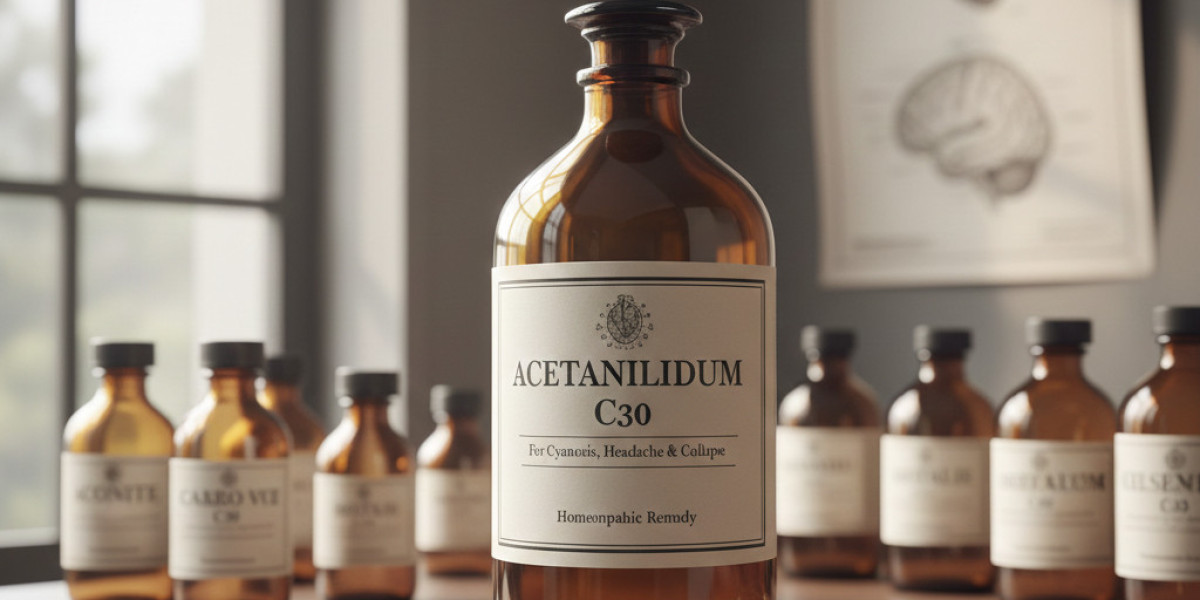

In the world of homeopathy, certain remedies act as "specialists" for very specific physiological states. Acetanilidum is a prime example. While it originated in the world of conventional chemistry as a fever-reducer, its homeopathic preparation offers a nuanced approach to treating profound exhaustion, heart weakness, and oxygenation issues.
If you are looking for a remedy that addresses the intersection of nervous exhaustion and circulatory symptoms, Acetanilidum is a name you should know.
The Homeopathic Profile of Acetanilidum
Acetanilidum is most frequently indicated when a patient presents with a "blue" or "collapsed" state. In homeopathic philosophy, we look for the Total Symptom Picture. For Acetanilidum, that picture is dominated by a loss of vital heat and a struggling heart.
Core Indications:
Cyanosis: A distinctive bluish tint to the skin, lips, or fingernails.
Prostration: Extreme physical weakness where the patient feels they cannot move.
Albuminuria: Presence of protein in the urine, often linked to kidney stress.
Enlarged Heart: Used when the heart feels dilated or weak with a rapid, irregular pulse.
When to Consider Acetanilidum
1. The "Blue" Patient (Cyanosis)
This is perhaps the most famous symptom of Acetanilidum. When the blood fails to carry enough oxygen, resulting in a blue or greyish complexion, this remedy is often at the top of the list. It helps stabilize the blood's ability to transport oxygen and improves peripheral circulation.
2. Neuralgic Headaches
Unlike the throbbing, red-faced headache of Belladonna, an Acetanilidum headache is often accompanied by:
Paleness of the face.
Dilated pupils.
A feeling of fainting or lightheadedness.
Pain that feels like the head is expanding.
3. Edema and Swelling
Because of its action on the kidneys and the heart, it is sometimes used for Dropsy (edema) or swelling in the feet and ankles, especially when these symptoms are tied to a weak pulse and overall coldness of the body.
Acetanilidum vs. Similar Remedies
To ensure the correct homeopathic match, it is helpful to contrast Acetanilidum with other common remedies:
| Symptom | Acetanilidum | Carbo Veg | Digitalis |
| Primary State | Blue skin + Heart weakness | Blue skin + Bloating/Gas | Slow pulse + Heart failure |
| Temperature | Sudden drop in heat | Coldness + Craving air | Coldness + Weakness |
| Pulse | Rapid and irregular | Small and thread-like | Very slow or intermittent |
Safety and Potency
Homeopathic Acetanilidum is prepared through a process of serial dilution and succussion (shaking), which removes the toxic side effects associated with the crude chemical.
Common Potency: Usually prescribed in 3x, 6x, or 30c, depending on the severity of the symptoms.
Guidance: Because this remedy acts deeply on the heart and blood, it should always be used under the supervision of a Certified Homeopathic Consultant.
Conclusion
Acetanilidum is a powerful "rescue" remedy in the homeopathic materia medica. Its ability to address states of collapse, cyanosis, and intense neuralgic pain makes it an invaluable tool for complex cases where the patient's vital energy is severely depleted.