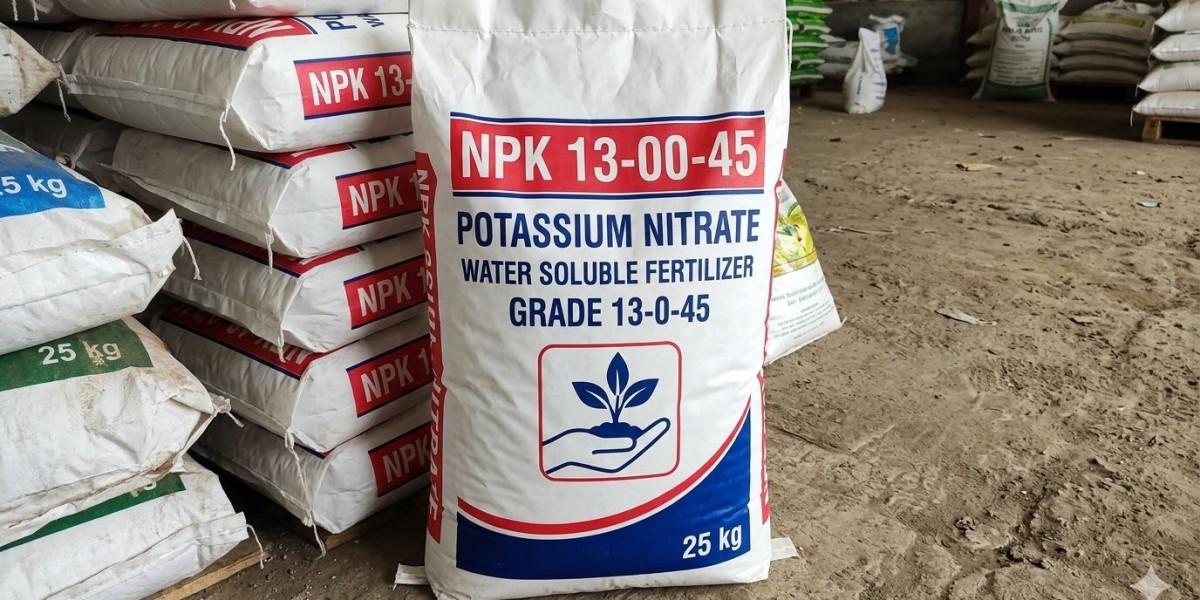

NPK 13-00-45, commonly known as Potassium Nitrate fertilizer, is a highly effective water-soluble fertilizer widely used in modern agriculture. It contains 13% nitrogen (N) and 45% potassium (K), making it an ideal fertilizer for improving plant growth, fruit development, and crop quality.
Because of its high potassium content, this fertilizer plays a crucial role in enhancing plant strength, improving yield, and increasing resistance to environmental stress.
Composition and Nutritional Role
NPK fertilizers provide essential nutrients required for plant growth. In NPK 13-00-45, the nutrients perform the following roles:
Nitrogen (13%)
Supports leaf and stem growth
Promotes photosynthesis
Enhances overall plant vigor
Potassium (45%)
Improves fruit size and quality
Strengthens plant resistance to drought and disease
Enhances color, taste, and shelf life of crops
Unlike many fertilizers, potassium nitrate contains no chloride, making it safe for sensitive crops.
Agricultural Importance
NPK 13-00-45 is extremely valuable in high-value agriculture such as horticulture and greenhouse farming. Farmers use it to improve crop productivity and quality.
Major Agricultural Benefits
Encourages strong root development
Enhances flowering and fruit formation
Improves crop yield and size
Increases resistance to plant diseases
Enhances fruit sweetness and color
This fertilizer is especially beneficial during flowering and fruiting stages of plant growth.
Crops That Benefit from Potassium Nitrate
Farmers commonly apply NPK 13-00-45 to many crops, including:
Fruits such as mango, grapes, and citrus
Vegetables like tomatoes, potatoes, and peppers
Plantation crops
Greenhouse vegetables
Flower crops
It is also widely used in drip irrigation systems and foliar sprays because it dissolves easily in water.
Harvest and Yield Improvements
When applied properly, potassium nitrate can significantly improve crop harvest quality. Farmers often observe:
Larger fruits and vegetables
Improved crop color and taste
Better storage life after harvest
Higher market value of produce
These benefits make it one of the most preferred fertilizers for commercial farming.
Business and Market Importance
The global fertilizer industry strongly depends on potassium-based fertilizers. NPK 13-00-45 has strong demand due to its efficiency and compatibility with modern irrigation systems.
Business Opportunities
Agricultural businesses use this fertilizer in:
Precision farming
Hydroponics systems
Greenhouse cultivation
Export-oriented fruit production
Fertilizer manufacturers, distributors, and agricultural suppliers benefit from its consistent demand in horticulture and high-value crop farming.
Environmental and Farming Advantages
Compared with many conventional fertilizers, potassium nitrate offers several advantages:
Highly water-soluble
Quick nutrient absorption by plants
Compatible with fertigation systems
Low environmental residue when used correctly
These characteristics make it suitable for modern sustainable agriculture practices.
Future Scope in Agriculture
With the rise of advanced farming techniques such as precision agriculture, hydroponics, and drip irrigation, the demand for water-soluble fertilizers like NPK 13-00-45 is expected to increase.
Farmers growing export-quality fruits and vegetables increasingly rely on potassium nitrate to produce high-quality crops that meet international market standards.
Conclusion
NPK 13-00-45 (Potassium Nitrate) is a powerful fertilizer that plays a crucial role in improving crop yield, fruit quality, and plant health. Its high potassium content makes it especially valuable during flowering and fruiting stages. As agriculture moves toward efficient and sustainable practices, potassium nitrate will continue to be an essential tool for farmers worldwide.