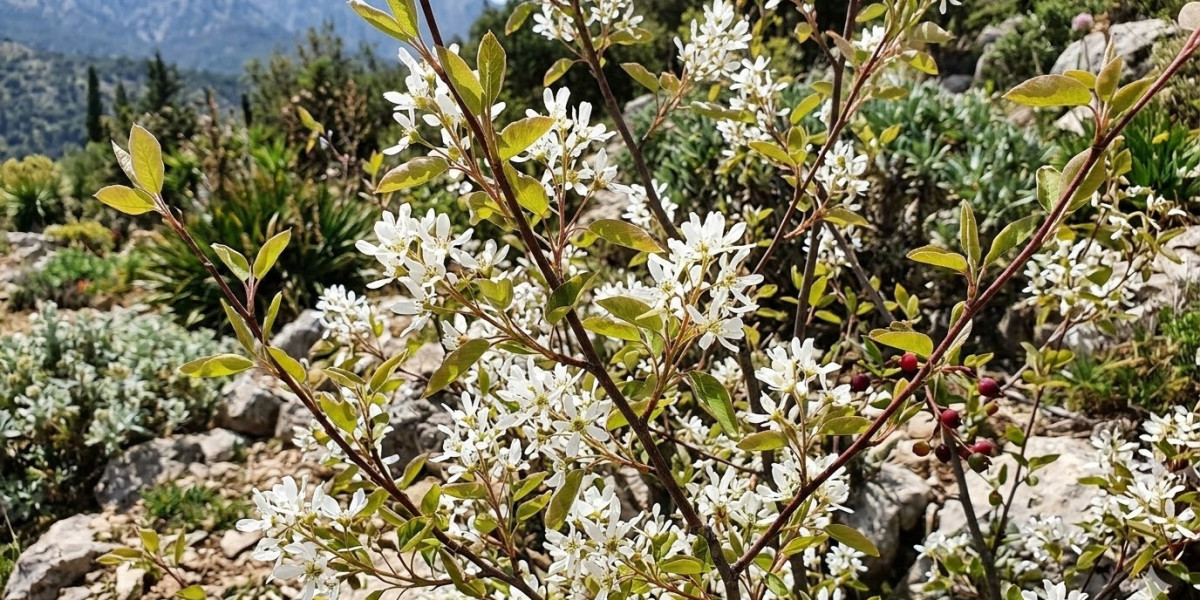

Amelanchier parviflora, commonly known as Small-flowered Serviceberry, is a lesser-known but valuable fruit-bearing shrub belonging to the rose family. Native to parts of Europe and Western Asia, this plant produces small edible berries and has growing importance in sustainable agriculture, specialty fruit markets, and ecological farming systems.
1. Agricultural Importance
Climate Adaptability
Amelanchier parviflora is highly adaptable and grows well in:
Temperate climates
Mountain and semi-dry regions
Well-drained soils
Areas with moderate rainfall
This resilience makes it suitable for low-input farming and ecological restoration projects.
Soil Requirements
Best growth occurs in:
Loamy or sandy soils
Slightly acidic to neutral pH
Good drainage conditions
The plant is tolerant of poor soils, making it useful for marginal agricultural lands.
2. Role in Sustainable Agriculture
Small-flowered serviceberry contributes to sustainable farming in several ways:
Supports pollinators such as bees
Enhances biodiversity in orchards
Requires minimal chemical fertilizers
Useful for agroforestry and mixed cropping systems
It is also planted for soil conservation in hilly or erosion-prone landscapes.
3. Harvesting Process
Growth Cycle
Flowers bloom in early spring
Fruits develop during late spring to early summer
Fully ripened berries turn dark purple or black
Harvesting Method
Fruits are hand-picked to avoid damage
Harvested once berries become soft and sweet
Multiple harvests may occur during the fruiting season
Post-Harvest Handling
After harvesting:
Fruits are cleaned and sorted
Packed for fresh consumption or processing
Refrigerated for short-term storage
Because the berries are delicate, careful handling is essential.
4. Business & Economic Importance
Market Demand
Serviceberries are gaining popularity due to:
High nutritional value
Antioxidant-rich fruits
Use in health foods and natural diets
They are used in:
Jams and preserves
Fruit juices
Bakery products
Nutritional supplements
Value-Added Products
Farmers and agribusinesses can produce:
Dried berries
Serviceberry jam
Fruit syrups
Organic berry powders
These products increase the commercial value of the crop.
5. Ecological & Landscaping Value
Besides fruit production, Amelanchier parviflora is widely used in:
Landscape gardening
Urban greening projects
Wildlife habitat restoration
Its spring flowers, edible fruits, and autumn foliage make it an attractive multipurpose plant.
6. Future Scope
Interest in underutilized berries and functional foods is growing globally. This increases the agricultural importance of serviceberry species like Amelanchier parviflora.
Potential future opportunities include:
Organic berry farming
Nutraceutical production
Specialty fruit export markets
Conclusion
Amelanchier parviflora is an environmentally friendly fruit crop with strong ecological, agricultural, and commercial value. Its adaptability, nutritional berries, and suitability for sustainable farming make it a promising crop for future horticulture and specialty fruit markets.