
1. The Fiber Revolution: "White Jute"
Before synthetic cords dominated the market, A. ficulneus was a vital source of high-quality plant fiber.
The Process: By "retting" (soaking) the woody stems of the plant, farmers could extract long, white, silky fibers.
Strength: These fibers are comparable to jute but are often lighter in color and highly resistant to decay.
Modern Use: Today, as we move toward biodegradable packaging, the fibers of this plant are being re-studied for use in eco-friendly twine and paper pulp.
2. A Secret in the Sugar Industry
One of the most unique uses of Abelmoschus ficulneus is found in traditional sugar processing.
The Clarifier: The stems and roots contain a high concentration of mucilage. When crushed and added to boiling sugarcane juice, this mucilage binds to impurities.
The Result: It acts as a natural "flocculant," causing debris to rise to the top so it can be skimmed off, resulting in clearer, purer jaggery or sugar without the need for harsh chemicals.
3. Ethnobotany: The "Musk" in the Mallow
The name "Musk Mallow" isn't accidental.
The Seeds: Similar to its relative Abelmoschus moschatus, the seeds of A. ficulneus contain oils with a delicate, musky aroma.
Traditional Medicine: In various cultures, these seeds were crushed and used not only for their scent but as a stimulant and a treatment for digestive upsets.
4. Why You Should Grow It as a "Support Crop"
Even if you aren't making your own twine, A. ficulneus is a powerful tool for the permaculture garden:
Drought Resilience: It acts as a "pioneer species," growing in poor, compacted soils where other crops fail.
Pollinator Power: The large white blooms are a major food source for beneficial insects during the late summer heat.
Comparison: Industrial vs. Culinary Abelmoschus
| Feature | A. ficulneus (White Musk) | A. esculentus (Common Okra) |
| Stem Strength | Very High (Fiber Grade) | Moderate/Soft |
| Primary Extract | Industrial Mucilage | Dietary Fiber |
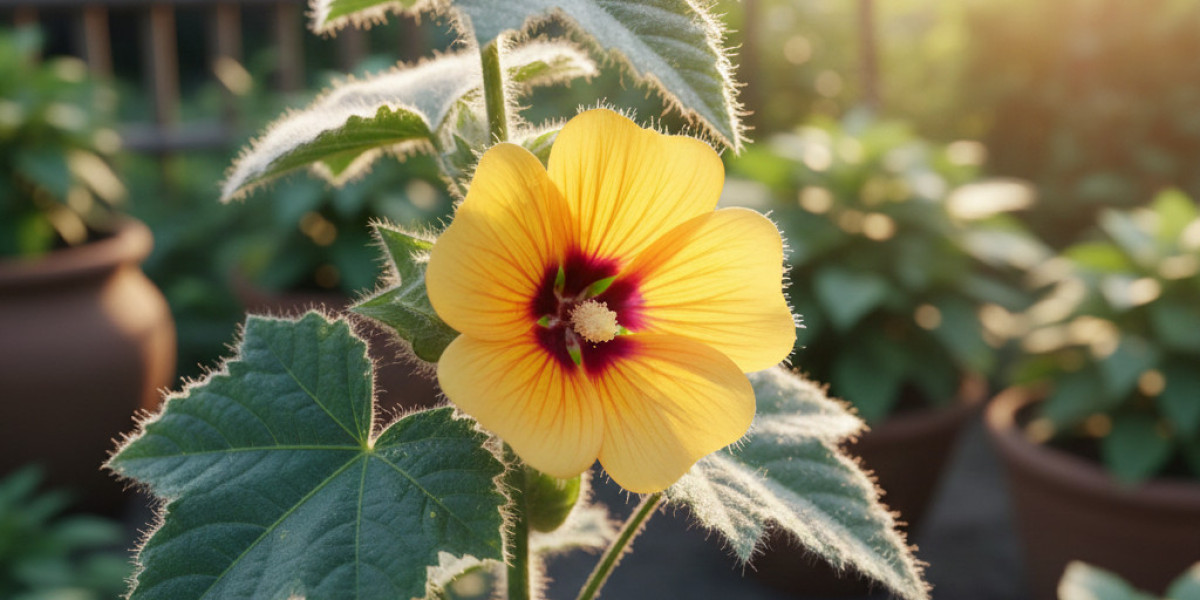
| Flower Profile | White/Pink (Wild Aesthetic) | Yellow (Garden Aesthetic) |
Conclusion
Abelmoschus ficulneus is a testament to the versatility of the mallow family. Whether you are interested in its history as a fiber crop or its potential as a natural clarifier, it deserves a spot in the conversation about sustainable plant use.