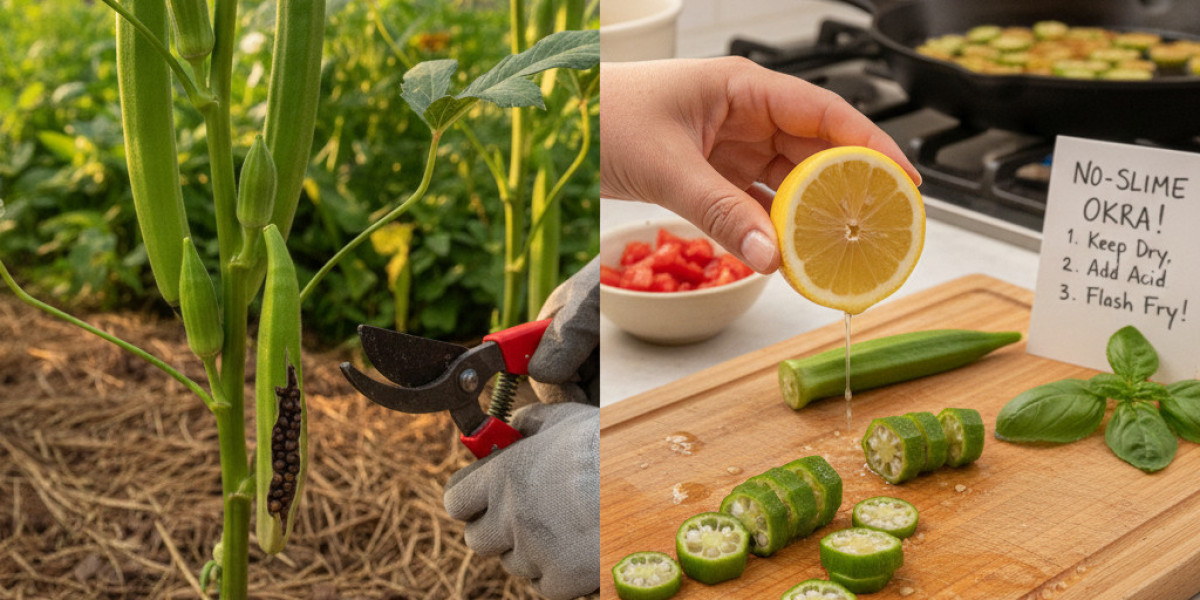

Abelmoschus esculentus (L.) Moench is one of the most rewarding plants to grow, but it can be a bit finicky if you don't know its secrets. Today, we’re breaking down the advanced tips every gardener and home cook needs to know.
1. Why Aren’t My Okra Seeds Sprouting?
Okra seeds have a "sleeping" mechanism—a hard outer shell that protects them. If you just toss them in dry soil, they might take weeks to emerge.
The Fix: Use a "scarification" technique. Gently nick the seed coat with sandpaper or soak them in warm water until they swell.
The Temperature Factor: Okra is a tropical native. If your soil is below 18°C, the seeds will simply rot. Patience is a virtue!
2. The "Hidden" Harvest Rule
Did you know that the more you harvest okra, the more it produces? If you leave a pod on the plant to get giant and woody, the plant thinks its job is done and stops producing new flowers.
Action Plan: Check your plants every 48 hours. If a pod is the length of your middle finger, cut it off immediately to signal the plant to keep pumping out more.
3. Dealing with the "Itch"
Many varieties of Abelmoschus esculentus are covered in tiny, invisible hairs (trichomes) that cause skin irritation.
Pro Tip: Always wear gloves and long sleeves when harvesting. If you hate the itch, look for "Spineless" varieties like Clemson Spineless for your next planting season.
4. How to Cook Okra Without the Slime
The "slime" is actually mucilage—a type of soluble fiber that is incredibly healthy but texturally polarizing. If you want a "dry" crunch, follow these three rules:
Keep it Dry: Never wash okra right before cutting. Wash it hours before and let it dry completely. Water triggers the mucilage.
Add Acid: Sauté your okra with a splash of vinegar, lemon juice, or chopped tomatoes. The acid breaks down the viscous texture.
Flash Fry: High heat is your friend. Crowding the pan creates steam, and steam creates slime. Cook in small batches at high temperatures.
5. Saving Seeds for Next Year
If you have a particularly productive plant, let one or two pods grow until they are brown and dry on the vine.
Storage: Pop the pods open, collect the black, peppercorn-sized seeds, and store them in a cool, dark place. They will remain viable for up to 2 years.
Summary Table: Okra Quick-Facts
| Feature | Requirement |
| Scientific Name | Abelmoschus esculentus |
| Best Companion | Peppers, Tomatoes, and Basil |
| Sun Exposure | 100% Full Sun |
| Watering | Deeply once a week (at the base) |
Is your okra garden struggling with pests? I can help you identify specific bugs if you describe what your leaves look like, or I can generate a recipe list for the best ways to cook your harvest!