
Acid reflux and Gastroesophageal Reflux Disease (GERD) affect millions of people worldwide. The condition occurs when stomach acid flows back into the esophagus due to a weak Lower Esophageal Sphincter (LES).
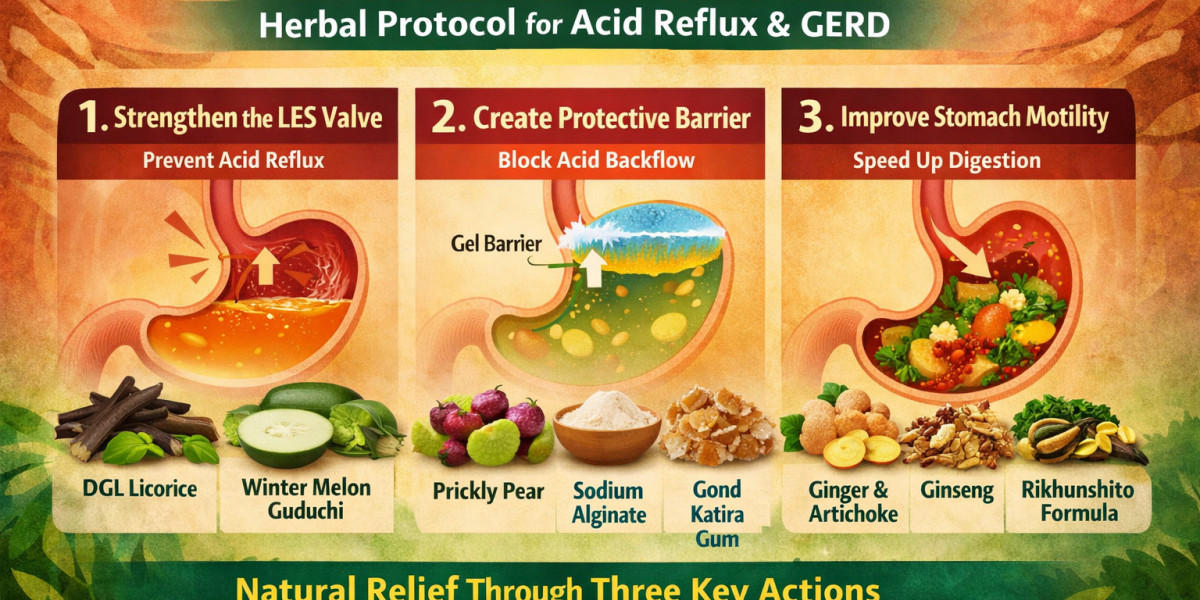
Recent global research (2025–2026) shows that the most effective natural treatment does not rely on a single herb. Instead, it uses a three-pathway herbal protocol that strengthens the stomach valve, protects the esophageal lining, and improves gastric motility.
This approach is known as the Triple-Action Herbal Protocol.
1. Strengthening the Lower Esophageal Sphincter (LES)
The LES is a small muscular valve located between the stomach and the esophagus. When this valve weakens, acid reflux occurs. Certain medicinal plants can help restore its strength and reduce excess acidity.
Key Herbal Ingredients
DGL (Deglycyrrhizinated Licorice)
Derived from Glycyrrhiza glabra, DGL supports stomach and esophageal health. Research shows it can improve LES muscle contraction and stimulate protective prostaglandins that strengthen the stomach lining.
Winter Melon (Benincasa hispida)
The fruit Benincasa hispida acts as a natural antacid. Studies indicate it reduces stomach acid volume and pepsin activity while preventing rebound acidity.
Guduchi
The Ayurvedic herb Tinospora cordifolia helps regulate acid production and reduces inflammation in the digestive tract.
Cumin
Seeds of Cuminum cyminum improve digestion and help balance gastric pH levels, reducing the chances of acid reflux.
Together, these herbs form the core LES-strengthening blend.
2. The Mucoadhesive “Bio-Raft” Barrier
One innovative strategy used in modern reflux research involves forming a protective raft on top of stomach contents. This barrier prevents acid from moving upward into the esophagus.
Key Ingredients
Sodium Alginate + Prickly Pear
Extracts from Opuntia ficus‑indica combine with sodium alginate to form a gel-like barrier in the stomach. When these substances react with gastric acid, they create a floating protective layer that stops acid reflux.
Clinical insights in 2025 showed that this combination was comparable to proton-pump inhibitors for non-erosive reflux disease, with significantly lower recurrence rates.
Gond Katira (Tragacanth Gum)
Derived from Astragalus gummifer, Gond Katira forms a soothing gel that coats the esophageal lining and provides a cooling effect. It is especially beneficial during summer-related acidity.
3. Pro-Kinetic Digestive Support
Even if acid production is controlled, reflux may still occur if the stomach empties slowly. Improving gastric motility is therefore an essential part of reflux management.
A traditional Asian herbal formula called Rikkunshito (also known as Yukgunja-tang) is widely studied for digestive disorders.
This formula typically contains herbs such as:
Panax ginseng
Zingiber officinale
Atractylodes macrocephala
Pinellia ternata
These ingredients enhance gastric accommodation, helping the stomach expand properly and move food downward. This reduces pressure on the LES and prevents nighttime reflux.
Example Triple-Action Herbal Protocol
A practical herbal routine based on current research may include:
Before Meals (Systemic Support)
DGL Licorice – 400 mg
Guduchi extract
Cumin extract
After Meals (Protective Barrier)
Sodium alginate
Prickly pear extract
Gond Katira
Night Support (Motility Support)
Ginger extract
Artichoke or Cynara extract
This combination targets acid control, mucosal protection, and digestive movement simultaneously.
Herbal Protocol vs Conventional Acid Reflux Medication
| Treatment Factor | Herbal Triple Protocol | PPI Medication |
|---|---|---|
| Relief onset | 15–30 minutes | 1–3 hours |
| LES strengthening | Strong support | Minimal |
| Side effects | Generally low | Possible nutrient deficiency |
| Long-term benefit | Supports tissue healing | May cause dependency |
Many patients who struggle with long-term reflux symptoms are now exploring integrative herbal strategies that support digestive health rather than simply suppressing acid.
Final Thoughts
The Triple-Action Herbal Protocol represents a modern integrative approach to managing acid reflux. By strengthening the LES, creating a protective barrier, and improving stomach motility, this strategy addresses the root causes of GERD rather than only controlling symptoms.
With growing research supporting herbal medicine, this approach may become an important complementary option for long-term digestive health.