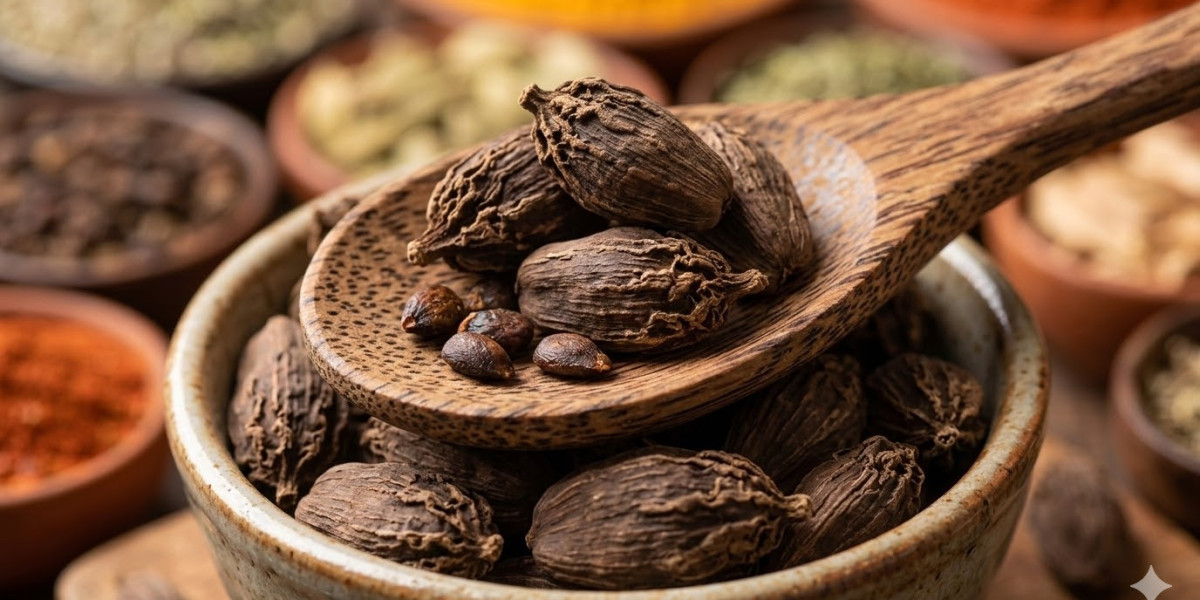

Black cardamom is one of the most distinctive spices used in traditional cooking. Known for its bold, smoky aroma and earthy flavor, it is commonly used in savory dishes, spice blends, and herbal preparations. Unlike green cardamom, black cardamom adds depth and richness to curries, soups, and rice dishes.
This aromatic spice is obtained from the plant Amomum subulatum and has significant agricultural and economic importance, especially for farmers living in mountainous regions.
Agricultural Importance of Black Cardamom
Black cardamom cultivation is highly important in hill agriculture. The plant thrives in cool climates and grows well under the shade of forest trees, making it suitable for agroforestry systems.
Major producing countries include:
India
Nepal
Bhutan
China
In these regions, black cardamom farming provides an important source of income for rural communities while maintaining ecological balance in forest ecosystems.
The crop is also beneficial because it protects soil from erosion and promotes biodiversity in hilly landscapes.
Ideal Growing Conditions
Black cardamom plants grow best in environments that provide:
Cool temperatures
High humidity
Rich organic soil
Partial shade from trees
The crop is typically planted in forest-based farming systems, where natural shade helps maintain moisture and protects the plants from excessive sunlight.
The plants usually begin producing cardamom capsules two to three years after planting and can continue producing for many years.
Harvesting Process
The harvesting of black cardamom is a labor-intensive process that requires careful attention.
Fruit Development
The plant produces capsule-like fruits that mature during the rainy season. Farmers monitor the crop carefully to harvest the pods at the right stage.
Harvesting Method
Capsules are hand-picked when they reach maturity
Care is taken to avoid damaging the plant
Harvesting may take place multiple times during the season
Drying and Processing
After harvesting, the capsules are traditionally dried over wood-fired ovens. This drying process gives black cardamom its unique smoky flavor and dark color.
Once dried, the pods are cleaned, graded, and packed for market distribution.
Business and Trade Importance
Black cardamom has strong demand in both domestic and international markets. It is widely used in:
Traditional Asian cuisine
Spice blends such as garam masala
Pickles and sauces
Herbal medicines
Food manufacturers, spice traders, and exporters rely on black cardamom as an important ingredient in many culinary products.
Economic Benefits for Farmers
For farmers in mountainous regions, black cardamom cultivation offers several advantages:
Long-term income from perennial plants
High market value compared to many crops
Low soil erosion due to shaded cultivation
Opportunities in export markets
Because it grows under forest trees, it also supports sustainable agriculture and environmental conservation.
Future Market Potential
Global demand for authentic spices continues to grow as consumers explore international cuisines. This trend increases the commercial value of black cardamom in the global spice trade.
With improved farming techniques, organic certification, and modern packaging, black cardamom producers can reach new markets and increase profitability.
Conclusion
Black cardamom is not only a powerful culinary spice but also an important agricultural crop that supports rural livelihoods and sustainable farming. Its unique smoky flavor, economic value, and ecological benefits make it a vital part of the global spice industry.