
As the world shifts towards sustainable and natural resources, Alkanet root (Alkanna tinctoria or Ratanjot) is emerging as a high-potential specialty crop. Beyond its historical use as a dye, its cultivation and processing offer lucrative opportunities for farmers and agropreneurs seeking to tap into the booming natural products market.
This guide delves into the agricultural aspects of Alkanet root, from the field to the market, highlighting its profitability and diverse uses.
1. Cultivating Alkanet Root: A Hardy Perennial
Alkanet is a resilient herbaceous perennial, making it an attractive crop for various agricultural systems.
A. Climate and Soil Requirements
Climate: Thrives in Mediterranean climates with hot, dry summers and mild, wet winters. It prefers full sun.
Soil: Well-drained, sandy-loam to loamy soils are ideal. It can tolerate poor, stony soils, but rich organic matter can boost root development. A slightly alkaline to neutral pH (7.0-8.0) is often preferred.
Water: Drought-tolerant once established, requiring minimal irrigation. Overwatering can lead to root rot.
B. Propagation
Seeds: Can be direct-sown in spring or fall. Germination can be slow and erratic, benefiting from cold stratification.
Root Cuttings: This is the most reliable method for commercial cultivation, ensuring genetic consistency and faster establishment. Cuttings can be taken from mature roots and planted directly.
C. Spacing and Care
Spacing: Plant seedlings or cuttings about 30-45 cm (12-18 inches) apart in rows 60-90 cm (24-36 inches) apart to allow for root expansion and easy harvesting.
Fertilization: Minimal fertilizer is usually needed. A balanced organic fertilizer or compost can be applied at planting.
Weed Control: Critical in the early stages to prevent competition. Mulching can help suppress weeds and retain soil moisture.
2. Harvesting Alkanet Root: Timing is Key
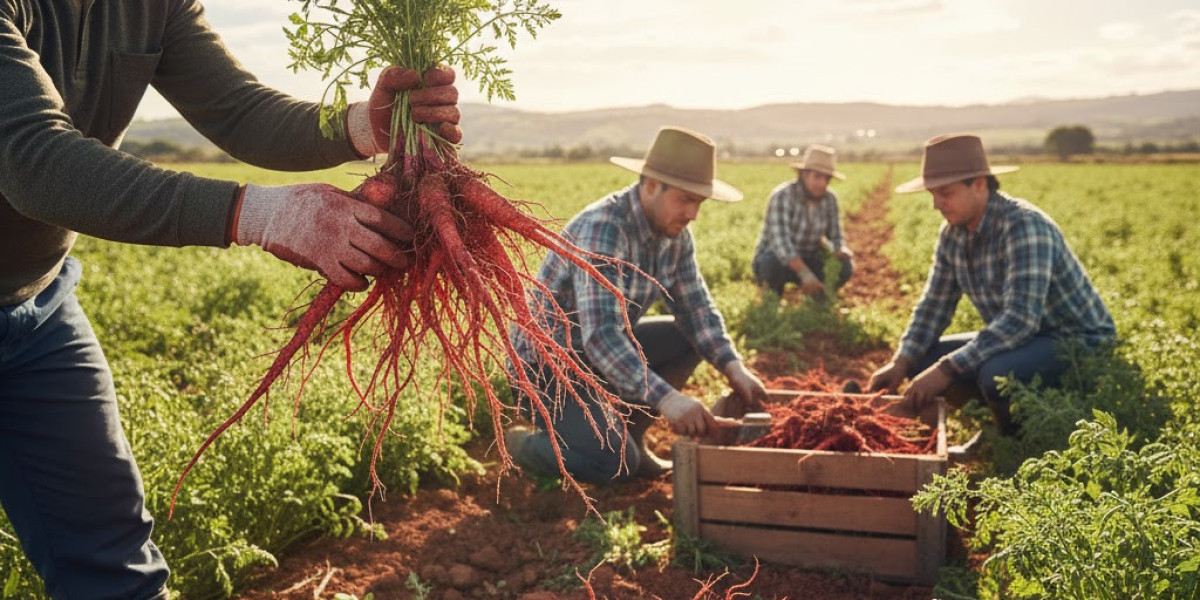
The deep red pigment (alkannin) accumulates in the roots, making them the most valuable part of the plant.
Timing: Roots are typically harvested in the second or third year of growth to ensure maximum pigment concentration. Harvesting usually occurs in late fall or early spring when the plant's energy is stored in its roots.
Method:
Loosening the Soil: The long taproots require careful excavation. A broadfork or garden fork can be used to gently loosen the soil around the plant.
Digging: Carefully dig up the roots, trying to minimize damage.
Cleaning: Shake off excess soil. Roots can be gently washed, but avoid excessive scrubbing which can damage the delicate outer bark containing the most pigment.
Post-Harvest: Roots are then typically dried in a well-ventilated, shaded area to prevent mold and preserve the pigment. Proper drying is crucial for long-term storage and marketability.
3. Other Agricultural Usages & Ecosystem Benefits
Beyond its commercial value, Alkanet root offers several ecological advantages:
Soil Stabilization: Its deep root system helps prevent soil erosion, making it suitable for sloped or degraded land.
Pollinator Support: The plant produces small, bell-shaped flowers that attract bees and other beneficial insects.
Drought Tolerance: A good choice for arid or semi-arid regions, contributing to resilient agricultural systems.
Low Input Crop: Requires minimal water, fertilizer, and pesticides, reducing environmental impact.
4. Agricultural Profitability: A Niche Market Opportunity
Alkanet root offers compelling profitability due to its specialized demand and versatility.
High Value per Kg: Dried Alkanet root commands a significantly higher price than many conventional crops, ranging from $15-$40+ USD per kg depending on quality, purity, and market demand.
Diverse Sales Channels:
Direct to Cosmetic Formulators: Supply roots or powdered extracts for natural lipsticks, soaps, and skincare.
Food Industry: Sell as a natural food colorant for oils, dairy, and confectionery.
Textile Industry: Provide raw material for eco-friendly textile dyes.
Herbal Medicine: Supply to apothecaries and supplement manufacturers for its anti-inflammatory properties.
Wholesale to Spice/Herb Distributors: Access a broader market.
Value-Added Products: Farmers can increase their margins by processing the dried root into powder, infused oils, or tinctures directly. This moves the farm from a raw material supplier to a finished product producer.
Sustainable Farming Incentive: Growing Alkanet aligns with organic and sustainable farming practices, attracting premium buyers and potentially qualifying for eco-certifications.
Conclusion
Cultivating Alkanet root represents a strategic move for farmers looking to diversify into high-value specialty crops. Its robust nature, combined with its high demand in the natural food, cosmetic, and dye industries, makes it an agriculturally profitable and environmentally sound investment. By implementing best practices in cultivation and harvesting, and exploring value-added processing, farmers can unlock significant economic potential from this ancient, yet highly relevant, botanical.