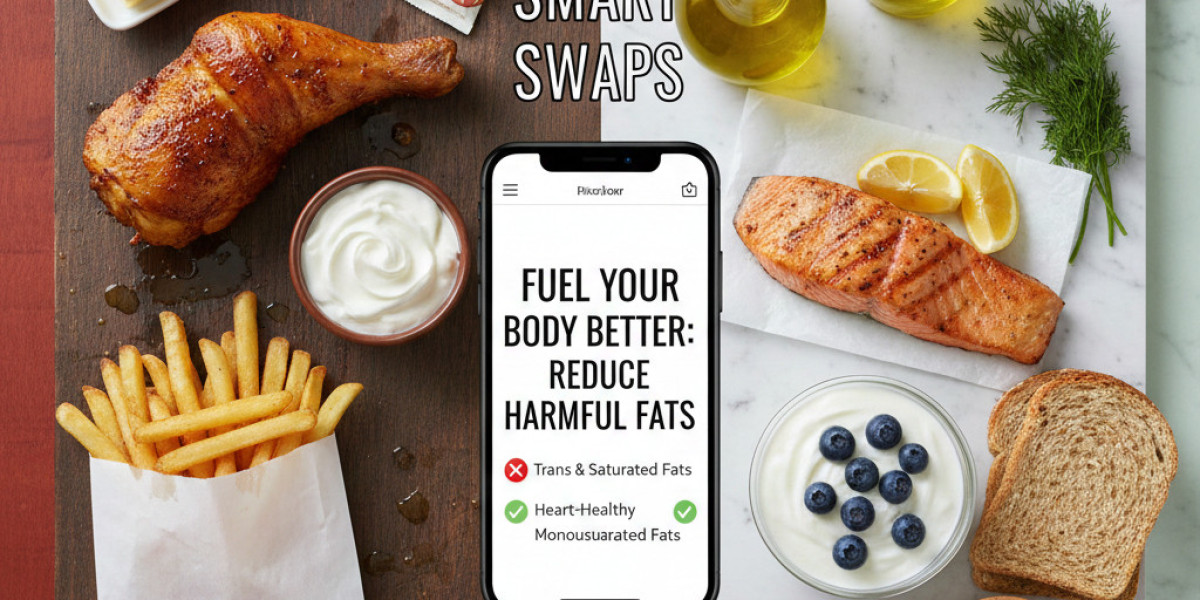

Not all fats are created equal. While your body needs healthy fats for energy and cell growth, consuming too many saturated and trans fats can increase your risk of heart disease and high cholesterol.
1. Know Your "Red Light" Fats
To reduce harmful fats, you first need to identify them on food labels:
Trans Fats: Often listed as "partially hydrogenated oils." These are the most dangerous fats, commonly found in fried fast foods, non-dairy creamers, and shelf-stable baked goods.
Saturated Fats: Found primarily in animal products (fatty meats, butter, cheese) and some tropical oils like coconut and palm oil.
2. Smart Swaps for Everyday Meals
Making small changes to your cooking habits can significantly lower your intake of "bad" fats.
| Instead of... | Try... | Why? |
| Butter or Lard | Olive or Avocado Oil | These contain heart-healthy monounsaturated fats. |
| Whole Milk / Cream | Low-fat or Plant-based milk | Reduces saturated fat while keeping the calcium. |
| Fatty Ribs/Steak | Skinless Poultry or Fish | Leaner proteins reduce artery-clogging grease. |
| Sour Cream | Plain Greek Yogurt | Provides a similar creamy texture with added protein. |
3. Change Your Cooking Techniques
The way you prepare food is just as important as the ingredients themselves.
Steam, Grill, or Bake: Avoid deep-frying. These methods require little to no added fat.
Trim the Fat: Before cooking meat, cut off the visible white fat. If cooking poultry, remove the skin.
Use a Rack: When roasting meat, use a wire rack so the excess fat can drip away from the food.
4. Be a "Label Detective"
Processed "low-fat" snacks are often loaded with sugar to make up for the lost flavor. Instead of reaching for processed diet foods, look for whole-food snacks:
Nuts and Seeds: A handful of walnuts or almonds provides healthy fats that keep you full.
Avocado: Use mashed avocado on toast instead of butter.
Berries: If you're craving something sweet, fruit is naturally fat-free and high in fiber.
Pro Tip: Look for the "Heart-Check" mark on packaging. It’s a quick way to identify foods that meet the American Heart Association's criteria for saturated fat and cholesterol levels.
Reducing harmful fats doesn't happen overnight, but by choosing liquid oils over solid fats and leaning into whole foods, you’re giving your heart a massive head start.